

Student Tracker Digital Journal
Our digital Gather 'Round Student Record-Journal is a quarterly record book that will help your students plan, organize their time, and more importantly, track their grades and credits for high school. It is undated so it can be started at any time and made to fit your student's life.
This listing is for the digital version, which is priced a bit higher only because you are able to use it over and over again. The digital version is quarterly, so you would print a new journal each quarter.
These are meant to be used by your student, though some families may choose to adapt it to use it themselves instead.
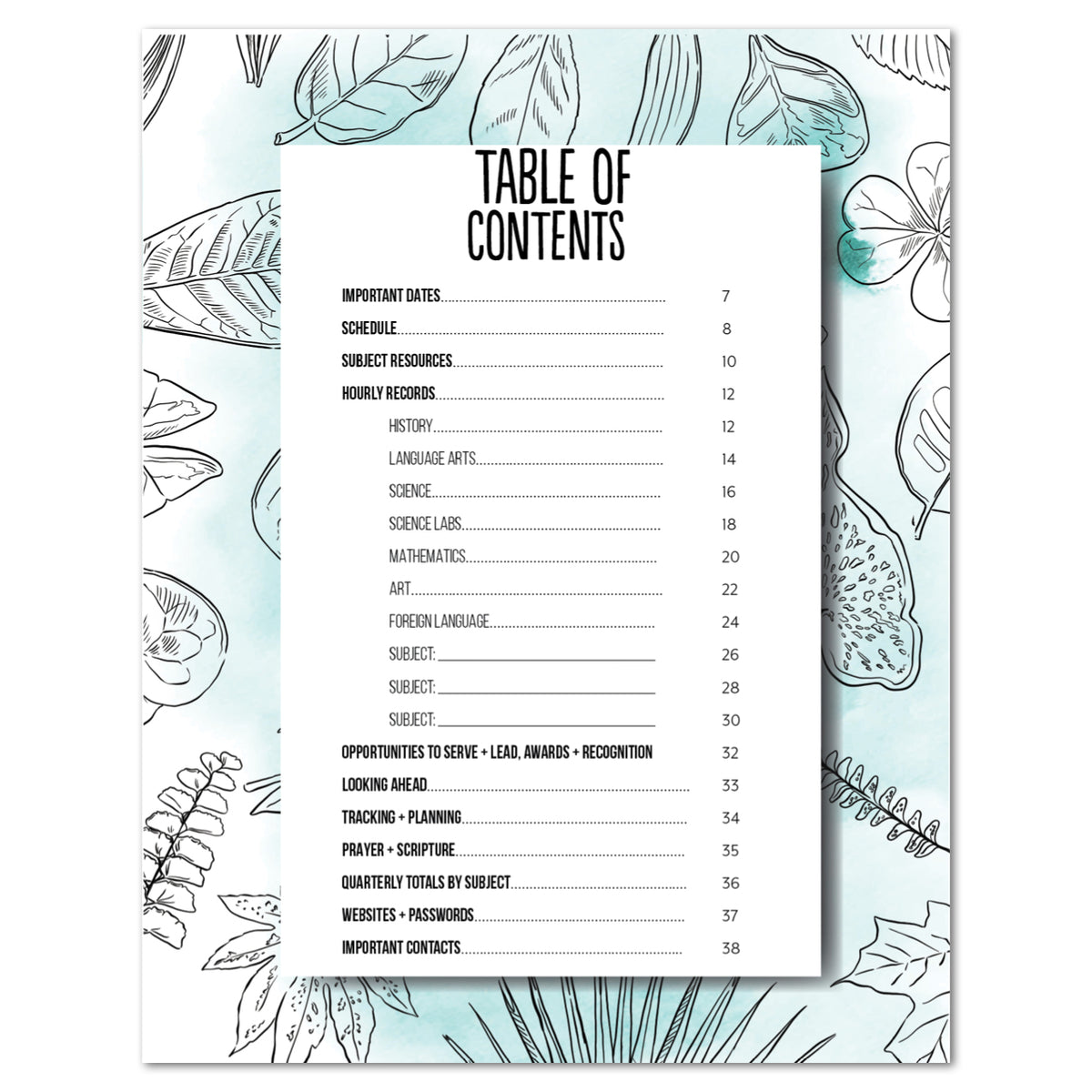
Here are a few areas we want to highlight from this record journal:
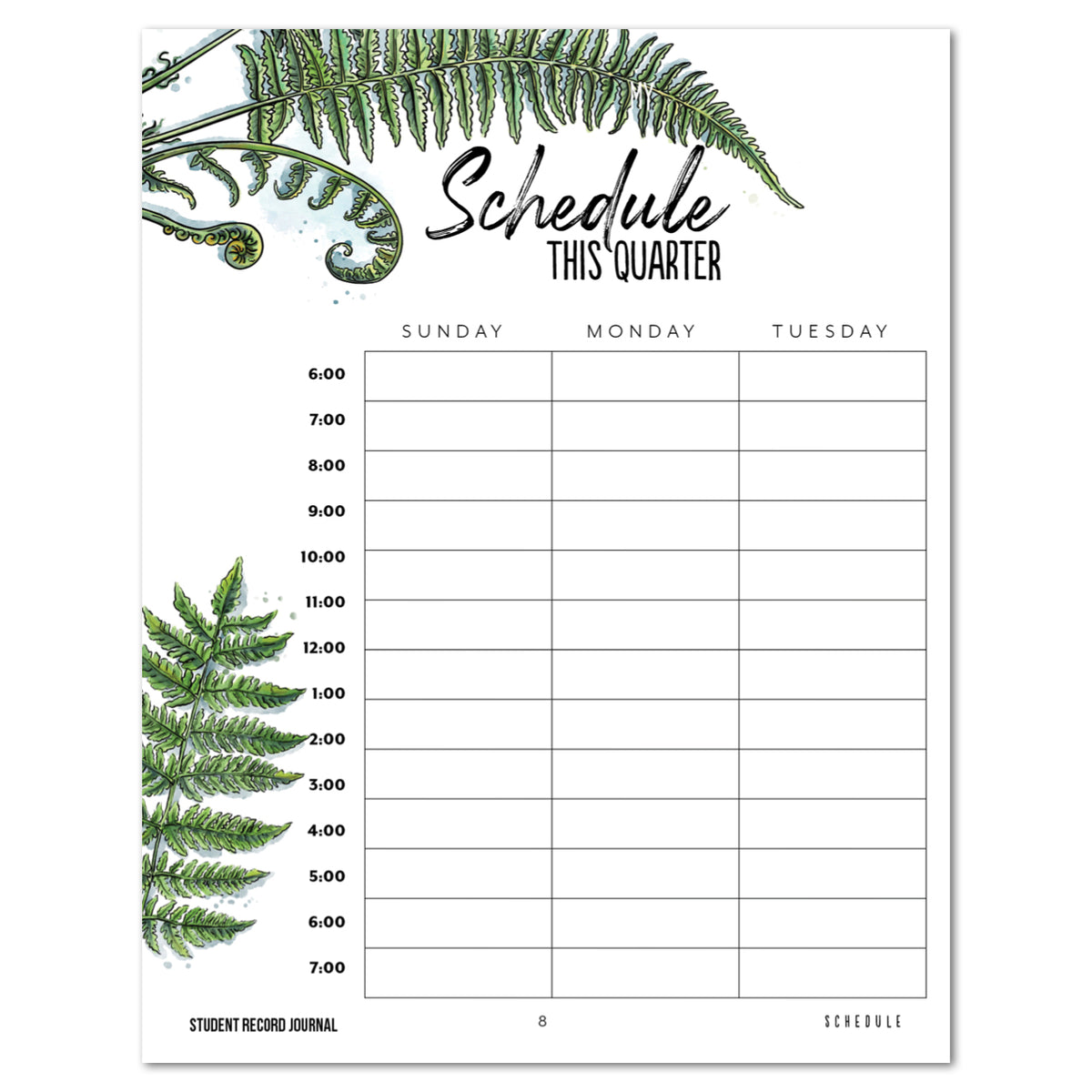
My Schedule
Use the My Schedule page to record weekly events like appointments, class times, music lessons, and even usual meal times to help you see at a glance where the bulk of your time should be spent and what you need to prepare for
Subject Resource Page
The Subject Resource page is for you to write down all the different books, videos, materials, and other supplemental resources you will need and use by subject. This is also helpful for you to see the subject study overview all in one place.
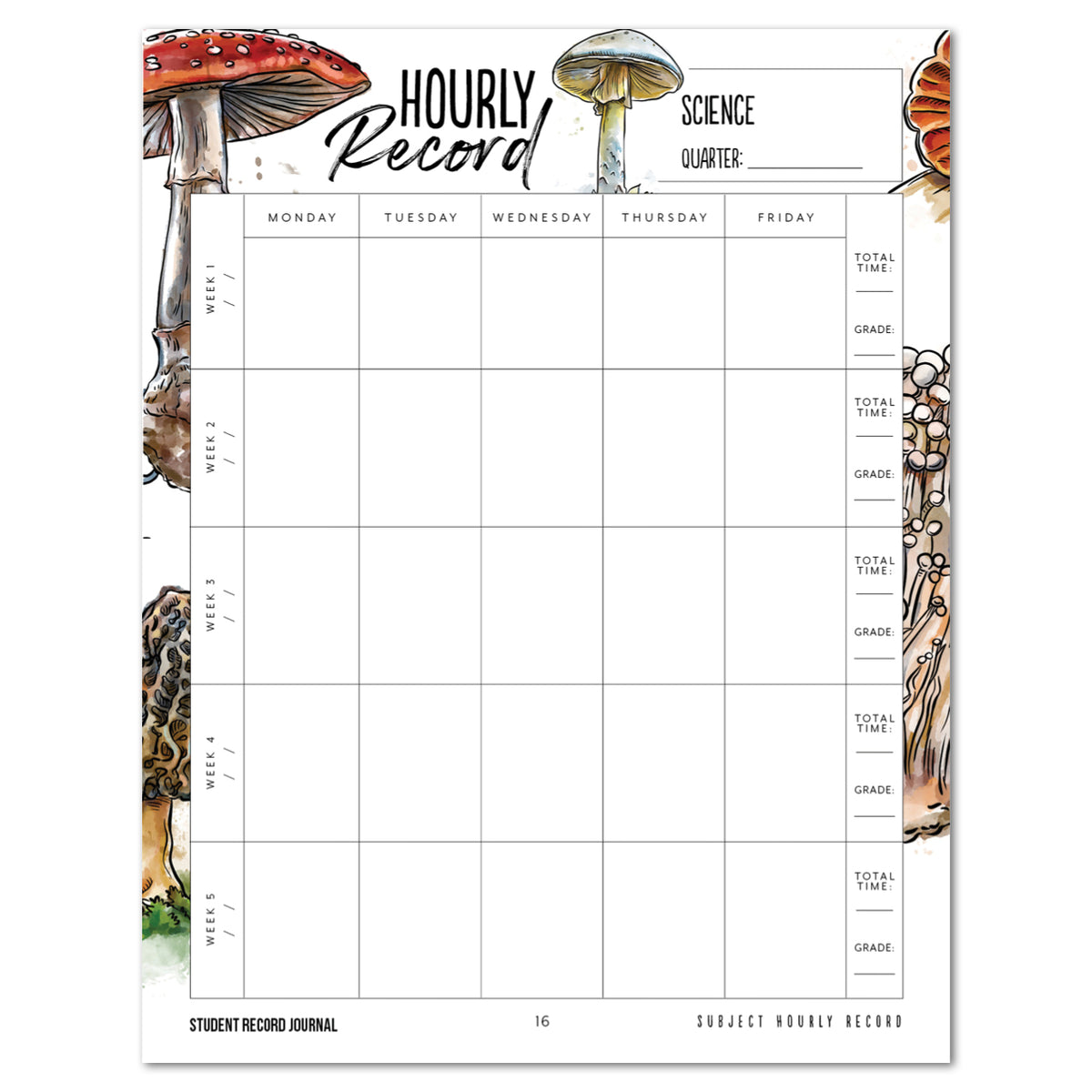
Subject Hourly Record
This is the heart of your book where you can log the time you spend on each subject and what you did! Remember to record time in extra reading, training, field trips, and of course, writing about this subject. There are blank subject pages if you need them for an elective such as Debate or Physical Education. You can also record your grades here too! Tips: write your time using abbreviations like 15 mins, 1 hr, etc. and use a stopwatch or a timer as you work in each subject jotting down the time in the top corner of your workbooks. You can then add the time on these pages, totalling up the time weekly, and again at the end of the quarter
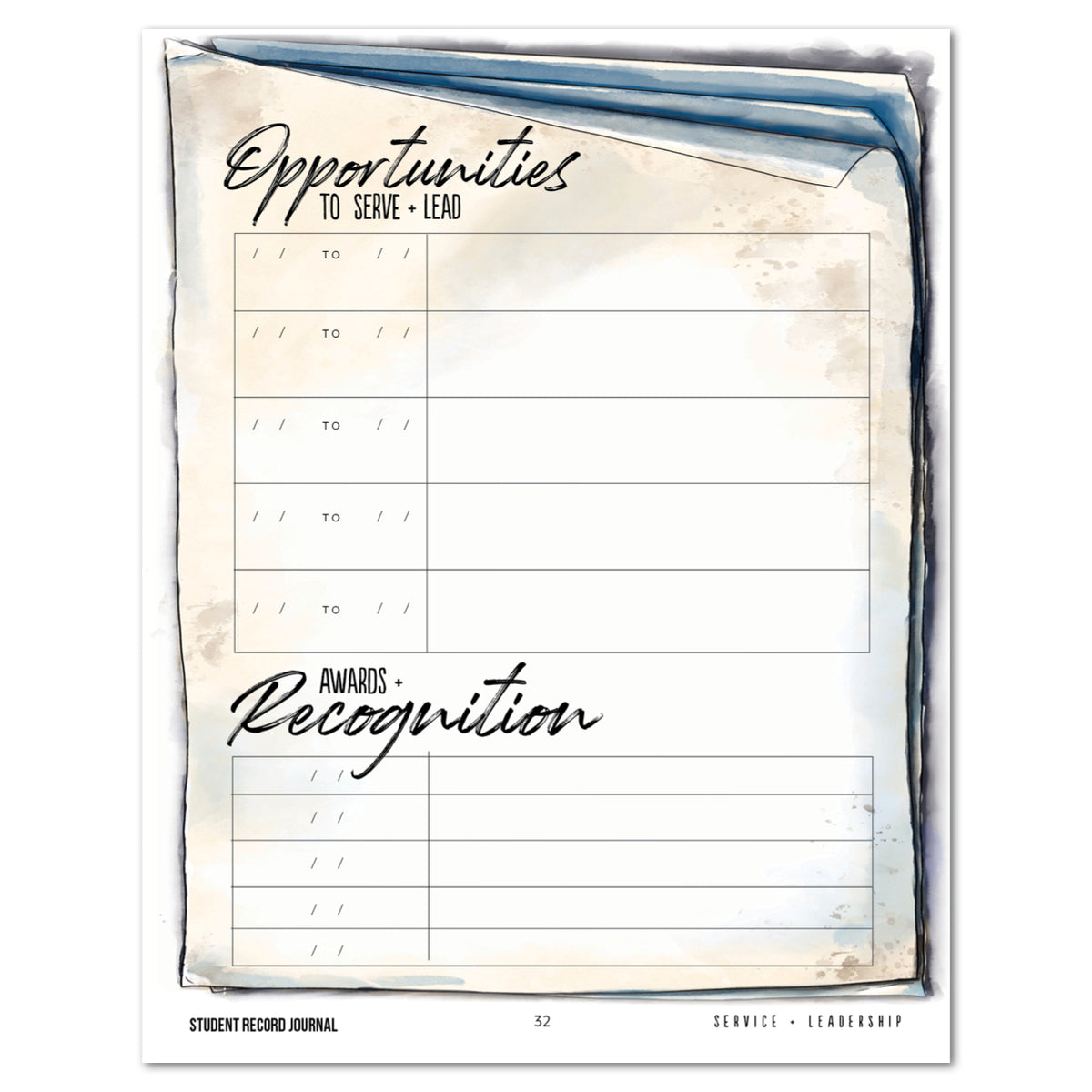
Opportunities, awards, AND goals
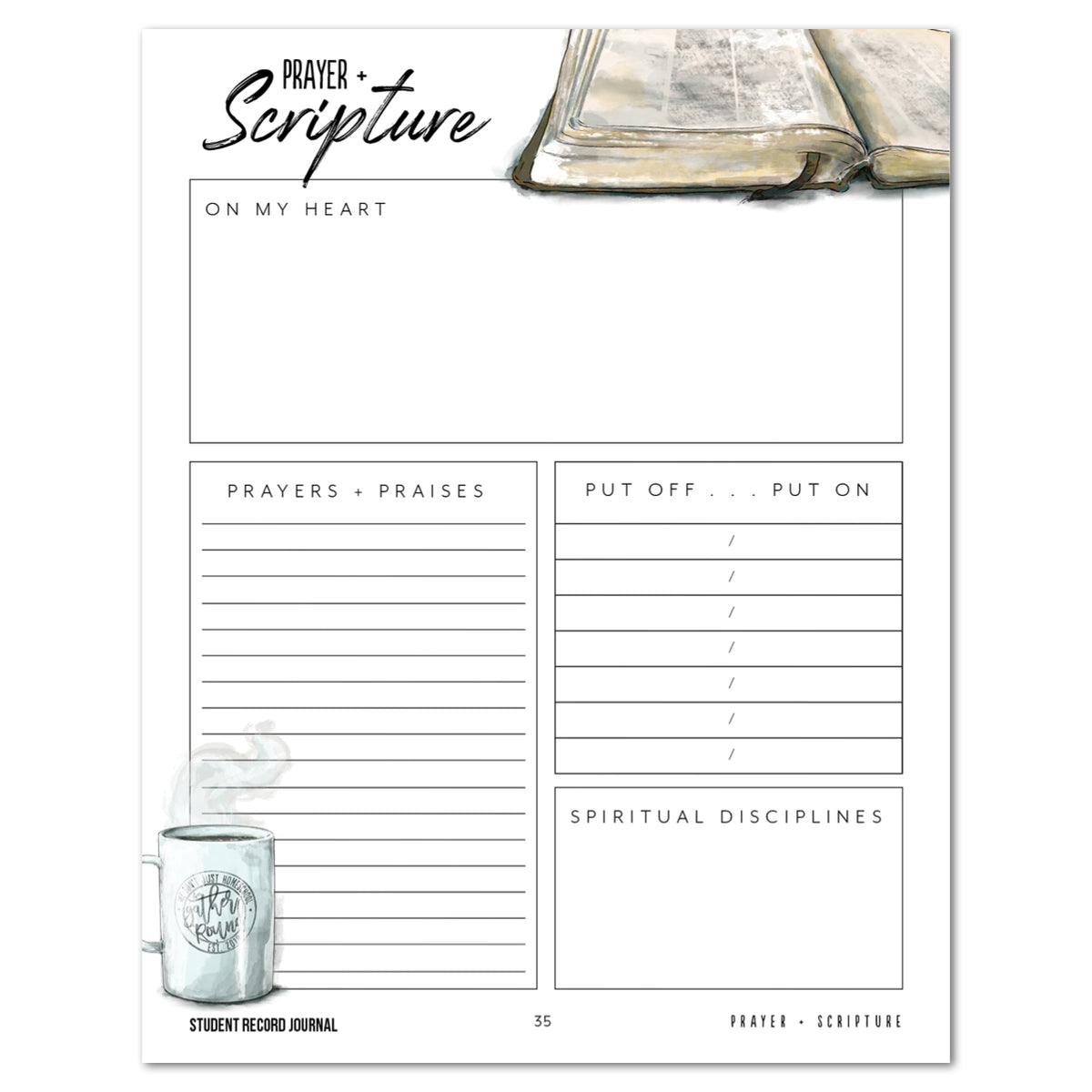
At the end of your book is a place to record volunteer and leadership opportunities, plus any awards you receive. You can write down your goals and favorite scriptures here too. You can easily flip to the last page for the websites and contacts you access often.
Attendance
This section will help you check off and keep track of your attendance.
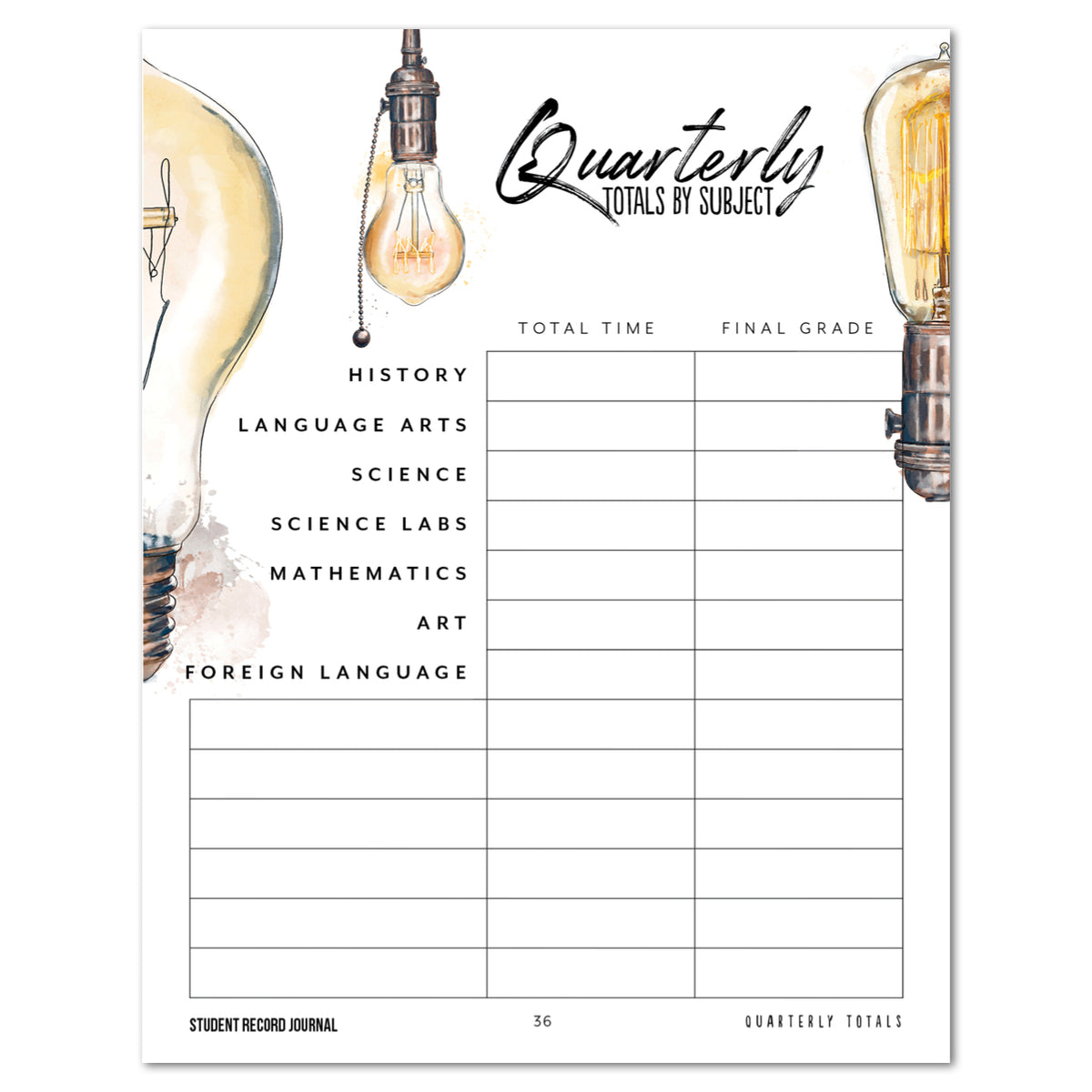
Quarterly credit organizer and yearly GPA tool
This book has everything you need to sort your grades, organize your course credits, and even figure out your GPA. The back has an official transcript you can fill out as well.
What's included? This product comes as an instant download in PDF format for you to print at home.
Print-at-home instructions: All digital files are designed to be printed double sided. Blank pages are intentional for messy art or cutouts, but are not marked to save on ink costs. Print from the free Adobe PDF reader and use the 'print as image' setting for best results.
Couldn't load pickup availability
What level should I get?
- Pre-Reader: Designed for preschool and kindergarten ages.
- Early Reader: Designed for emerging readers (or around 6-8 years old).
- Early Elementary: Designed for 8-10 year olds or struggling readers/writers who need more support. Has minimal writing.
- Upper Elementary: Designed for 10-13 year olds—requires sentence-length written responses.
- Middle School: Designed for 13-15 year olds—requires paragraph responses and some guided research.
- High School: Designed for 15-18 year olds—requires full page and essay responses, research, and personal reflection and application.
If you are between levels, we recommend leveling down in order to build confidence and focus on quality over quantity—especially if you are new to Gather 'Round. Each unit only lasts about a month, so you can always adjust as you go.
If you still feel lost, take the quiz here. This quiz is focused on the levels listed above.
If your student is younger or still struggling with basic reading and writing, select 3-6 years old on that quiz to help place them in our Letters and Numbers (PreK to K) or Ready to Read (K - Grade 1) Programs.
What about math or Fifty States?
Some of our other series have different levels. Take a look at what they mean for our mini units with levels below.
- Level 1: Pre-Reader and Early Reader levels
- Level 2: Early Elementary and Upper Elementary levels
- Level 3: Middle School and High School Levels
Math levels can vary by unit. For example, measurement concepts are expected to be mastered by grade 6, so we slowed down and had our first two books both apply to the kindergarten level. Alternatively, Decimals and Percents are concepts not taught until older grades, so our youngest level starts at grade 4 for those two. That being said, most of our units follow the guide below:
- Foundations: Kindergarten equivalent
- Step 1: Grade 1 equivalent
- Step 2: Grade 2 equivalent
- Step 3: Grade 3 equivalent
- Step 4: Grade 4 equivalent
- Step 5: Grade 5/6 equivalent
- Step 6: Grade 7-9 equivalent
Why some love digital:
Most of our units are available in both digital and print format. Some larger families prefer digital because they plan on recycling the units and using them over and over again or passing them down to younger siblings.
Digital:
Single Student Bundle: These bundles include one student notebook level of your choice and the Teacher's Guide. If you only have one student, select the digital format and then the level that best suits your student.
All (full family bundle): If you have more than one student, the full family bundle is your cheaper option. This bundle includes all levels of student notebooks as well as the Teacher's Guide . . . everything you need to get started.
*Digital is licensed for individual use only and cannot be shared outside your immediate family. Lessons can be taught only to students whom you are the legal parent or guardian of. If you want to do this unit with a group, it's easy! For small groups (such as friends or family), all we require is that each family own their own materials. For larger groups or groups that have money exchanged (such as co-ops, hybrids, or schools), we require printed materials—but we do offer a discount!
How your files are delivered: Your files will be available immediately after your purchase in your account right here on the website. They are in PDF format and locked to restrict editing in order to protect the integrity of the content. We recommend downloading and storing your files on your computer or a cloud storage service such as Google Drive or Dropbox for long-term access. You can use these digital files over and over again for your students, allowing you to redo units down the road in an older level!
Why some love print:
Most of our units are available in both digital and print format. Many of our families try print and never turn back for a few reasons:
- Print is usually cheaper than buying digital and printing through a printing service. Even if you print at home using the cheapest ink, it is often cheaper once you consider paper, ink, and binders. None of this accounts for the time of setting it all up for all your kids on a monthly basis, and time is money, right?
- Our print is also high quality and beautiful. We print on 32 pound paper. Our larger books (such as Teacher's Guides and full units) are coil bound with plastic (not wire) on the left and our smaller books are often printed as stapled booklets. We have an industrial printing press named Ivan that prints using ink—spraying over 1,000 dots per inch for vibrant color that is true to what you see on your screen!
What you need:
If you choose print, you will need to purchase a Teacher's Guide as well as one student notebook for each child.
In a nutshell
Gather 'Round is designed to be minimalistic, open-and-go, beautiful, and contextual so that learning is purposeful. It is Charlotte Mason inspired which means we focus on "less is more" and providing a feast of education.
How does this cover all subjects?
Our full units cover all your subjects but math. They are 20 lessons long and the Student Notebooks have 5 pages per day. We use contextual learning in Gather 'Round. This means that learning actually sticks! It might look like reading about a birds migration patters in the Teacher's Guide and then turning to an art lesson in the Student Notebook, a geography page, or even a Social Studies page about the difference between migration and immigration.
Mini units are less intensive. They usually only have 2 or 3 pages in the Student Notebooks and are more focused on that particular topic. Many families mix up full units and mini units to break up the year, reach certain topical focuses, or even add mini units on top of their regular units!
Math is covered through our Modular Math program, which goes from K-grade 9.
How long does it take?
Each lesson will take 30-60 minutes to read from the Teacher's Guide and then 1-2 hours to complete in student notebooks. Some families use the free video resources we have for our units to extend the lessons, while others move through it quicker so that they can add in their math or other electives. The time it takes can depend on the age of your students, the unit you are doing, and how many conversations you have or "rabbit trails" you take.
Recently viewed

Student Tracker Digital Journal

Student Tracker Digital Journal

Student Tracker Digital Journal

Student Tracker Digital Journal

Student Tracker Digital Journal

Student Tracker Digital Journal

Student Tracker Digital Journal

Student Tracker Digital Journal

Student Tracker Digital Journal
